Course outline — 100 minutes across 6 modules
- Why Liens Exist — the Chapter 44A Toolkit · ≈ 17 min
- The Lien Agent: Designation and the $40,000 Threshold · ≈ 17 min
- Information Flows: Who Must Tell Whom, and When · ≈ 16 min
- Perfecting the Claim: 120 Days, the Right Courthouse · ≈ 17 min
- Enforcement, Priority, and the Clock · ≈ 16 min
- Lien Risk Management for the Licensed GC · ≈ 17 min
MODULE 6 OF 6 · ESTIMATED 17 MIN
Lien Risk Management for the Licensed GC
Learning objectives
- Explain the general contractor’s two best lien-risk controls: paying subcontractors and obtaining lien waivers.
- Describe the owner’s double-payment exposure and the GC practices that prevent it.
- Connect the licensure statutes to lien practice: the $40,000 alignment and the unlicensed-contractor enforcement bar.
Lesson
DRAFT — pending instructor-of-record approval
Both sides of the ledger
For five modules you have mostly worn the claimant’s hat. Now wear the other one, because on every project you run, the lien system points AT you as much as it points FOR you. Your subcontractors and suppliers hold funds-lien rights that route through your payment ledger; your owner’s exposure to their claims is created — or extinguished — by how you pay and paper the job. The licensed GC’s lien-risk program comes down to two habits the industry has proven for decades: PAY YOUR SUBS AND SUPPLIERS, promptly and traceably, and COLLECT LIEN WAIVERS as you pay. Payment removes the debt that a lien would secure; the waiver documents the removal, payment by payment, so that at any moment you can show the owner and its title insurer exactly how much lien exposure remains on the project. Neither habit is sophisticated. Both are the difference between a routine closing and a claims file.

The double-payment problem
Understand the owner-side nightmare your practices prevent. An owner pays its general contractor in full. The GC fails to pay a supplier. The supplier, holding funds-lien rights and a subrogation path to the property, presses its claim — and the owner faces paying a second time for value it already paid the GC to deliver, or fighting an encumbrance on its own land. Every serious owner protection in this field — notices of claim of lien upon funds that freeze money in the chain, closing-table waiver packages, retainage practices, title-insurer scrutiny of the LiensNC record — exists because of that scenario. When you deliver clean waiver packages with every pay application, you are not doing clerical work; you are selling the owner certainty that the money flowing through you is extinguishing lien exposure rather than accumulating it. GCs who are disciplined about this get paid faster, precisely because their draw requests carry proof instead of risk.
Authority: N.C.G.S. § 44A-18 · N.C.G.S. § 44A-20
When a funds notice lands on your desk
Module 4 warned that notices of claim of lien upon funds arrive addressed to you. Treat the arrival as a payment-system event, not merely a legal one. The notice tells you a lower-tier party claims it has not been paid, and it obligates you with respect to funds you still hold in the chain. The wrong response is to keep paying as if nothing happened — pay the wrong party after notice and you can end up owing twice, which is the same double-payment trap one level down. The right response is procedural: log the notice, stop and review the affected payment path before the next disbursement, reconcile what is genuinely owed to whom, and resolve the claim — by directing payment where it belongs, obtaining the release, and documenting both. Your subcontract terms, your schedule-of-values discipline, and the waiver file you have been building since module 3 are what make that reconciliation fast instead of forensic.
Authority: N.C.G.S. § 44A-19 · N.C.G.S. § 44A-20
The licensure interlock
Two licensing-law doctrines belong in your lien playbook. First, the ALIGNMENT: since S.L. 2023-108 took effect on October 1, 2023, the § 87-1 licensure threshold, the § 87-14 permit-proof threshold, and the § 44A-11.1(a) lien-agent threshold all sit at $40,000. One number now answers three setup questions — is a licensed GC required, what must the permit applicant prove (licensure and workers’ compensation coverage under Chapter 97), and must the owner designate a lien agent. Price a job near that line and all three duties arrive together; let a change order push a $38,000 job to $43,000 and you must re-ask all three questions, not just one. Second, the ENFORCEMENT BAR: North Carolina case law applies a bright-line rule, rooted in the mandatory licensure statutes (§ 87-1, § 87-13), that a contractor who was unlicensed when a license was required CANNOT ENFORCE its construction contract to recover payment. Sit with what that does to lien rights: the lien secures payment obligations — a contractor barred from enforcing the underlying contract has nothing collectible for a lien to secure. Licensure is not adjacent to lien law; it is the floor lien rights stand on.
Authority: S.L. 2023-108 (H.B. 488), s. 2(h) · N.C.G.S. § 87-1 · N.C.G.S. § 87-14 · N.C.G.S. § 44A-11.1 · N.C.G.S. § 87-13
Four jobs, four calls
Close with the course’s facts applied end to end. JOB ONE: $36,000 interior upfit, no permit triggers, investor owner. Below $40,000 — no designation duty; your Chapter 44A rights still exist and your deadlines still run from last furnishing. A $6,000 change order later, the project is a $42,000 undertaking — the three aligned statutes are all in play now, and the time to have caught it was when the change was priced. JOB TWO: $150,000 addition for a family living in the home. Over threshold but exempt — existing, single-family, owner-occupied. No lien agent; everything else in this course still applies. JOB THREE: you sign a drywall sub on the 3rd; your subcontract template carries the lien agent block, so the three-business-day duty was met at signature; the sub files its notice to the lien agent that week — cheap insurance for a priority date that relates back to its first furnishing. JOB FOUR: a supplier’s last delivery was March 1 and payment has failed; the claim of lien belongs at the clerk of superior court in the property’s county by late June, and the enforcement window closes 180 days from that same March 1. If you can make those four calls cold, you have what this course was built to give you.
Authority: N.C.G.S. § 44A-11.1 · N.C.G.S. § 87-1 · N.C.G.S. § 87-14 · N.C.G.S. Ch. 44A, Art. 2
Worked example — what a clean waiver packet contains
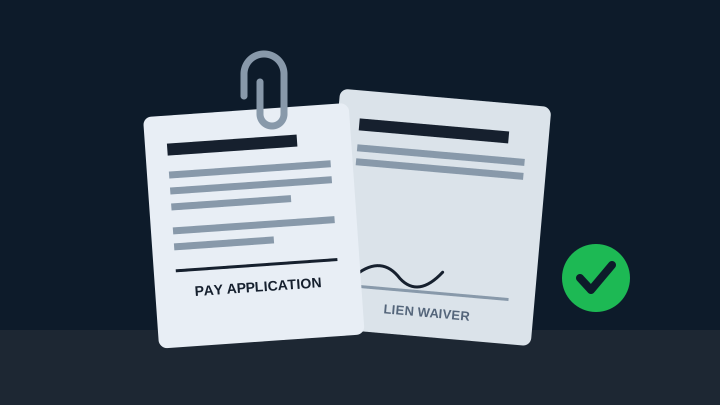
Make the packet concrete. With each pay application, assemble: a schedule-of-values line showing what this draw covers; a signed lien waiver from every subcontractor and supplier paid out of the previous draw, matched dollar-for-dollar to what they received; a running list of any party that has NOT yet waived, with the amount outstanding; and copies of any notice of claim of lien upon funds received since the last application, with its resolution. Hand the owner that stack and you have answered the only question that matters at a closing: how much lien exposure remains on this project, and who holds it? Contractors who deliver that packet get paid faster because the draw request carries proof instead of risk — and if a dispute ever arrives, the same file is the defense you would otherwise have to reconstruct under pressure.
Authority: N.C.G.S. § 44A-19
Where to verify — always
A closing discipline note. Statutes move — this course exists partly because a 2025 session law moved a number the industry had memorized for years. The controlling texts are Chapter 44A, Article 2 and Chapter 87 of the General Statutes, published by the North Carolina General Assembly, and the Board’s laws-and-regulations packet at nclbgc.org. When a real dispute is live, verify the current statute text and engage counsel — a two-hour elective sharpens your radar; it is not legal advice for a specific claim. What IS yours to keep from these 100 minutes: the $40,000 trigger and its exemption, the three-business-day relay, early notice to the lien agent, 120 to file with the clerk, 180 to enforce, relation back to first furnishing, and the pay-and-waiver habit that keeps your projects clean.
Authority: N.C.G.S. Ch. 44A, Art. 2
Traducción de cortesía — la versión en inglés es la oficial del curso.
Ambos lados del libro contable
Durante cinco módulos ha llevado sobre todo el sombrero del reclamante. Ahora póngase el otro, porque en cada obra que dirija el sistema de gravámenes apunta HACIA usted tanto como apunta A SU FAVOR. Sus subcontratistas y proveedores tienen derechos de gravamen sobre fondos que pasan por su libro de pagos; la exposición de su propietario a esas reclamaciones se crea — o se extingue — según cómo pague y documente la obra. El programa de riesgo de gravámenes del contratista general licenciado se reduce a dos hábitos que la industria ha probado durante décadas: PAGUE A SUS SUBCONTRATISTAS Y PROVEEDORES, con prontitud y de forma rastreable, y RECOJA RENUNCIAS DE GRAVAMEN a medida que paga. El pago elimina la deuda que un gravamen garantizaría; la renuncia documenta esa eliminación, pago por pago, de modo que en cualquier momento pueda mostrarle al propietario y a su aseguradora de títulos exactamente cuánta exposición a gravámenes queda en la obra. Ninguno de los dos hábitos es sofisticado. Ambos son la diferencia entre un cierre rutinario y un expediente de reclamaciones.
El problema del doble pago
Comprenda la pesadilla del lado del propietario que sus prácticas previenen. Un propietario paga íntegramente a su contratista general. El contratista no le paga a un proveedor. El proveedor, titular de derechos de gravamen sobre fondos y de una vía de subrogación hacia la propiedad, presiona su reclamación — y el propietario enfrenta pagar por segunda vez un valor que ya le pagó al contratista para que entregara, o pelear contra un gravamen sobre su propio terreno. Toda protección seria del propietario en este campo — los avisos de reclamación de gravamen sobre fondos que congelan dinero en la cadena, los paquetes de renuncias en la mesa de cierre, las prácticas de retención, el escrutinio del registro de LiensNC por parte de las aseguradoras de títulos — existe por ese escenario. Cuando usted entrega paquetes limpios de renuncias con cada solicitud de pago, no está haciendo trabajo administrativo; le está vendiendo al propietario la certeza de que el dinero que fluye a través de usted está extinguiendo exposición a gravámenes en lugar de acumularla. Los contratistas generales disciplinados en esto cobran más rápido, precisamente porque sus solicitudes de desembolso llevan prueba en lugar de riesgo.
Cuando un aviso sobre fondos llega a su escritorio
El módulo 4 advirtió que los avisos de reclamación de gravamen sobre fondos llegan dirigidos a usted. Trate esa llegada como un evento del sistema de pagos, no meramente como uno legal. El aviso le informa que una parte de nivel inferior alega no haber recibido pago, y lo obliga respecto de los fondos que aún retiene en la cadena. La respuesta equivocada es seguir pagando como si nada hubiera pasado — pague a la parte equivocada después del aviso y puede terminar debiendo dos veces, que es la misma trampa del doble pago un nivel más abajo. La respuesta correcta es procedimental: registre el aviso, deténgase y revise la ruta de pago afectada antes del siguiente desembolso, concilie qué se debe genuinamente y a quién, y resuelva la reclamación — dirigiendo el pago a donde corresponde, obteniendo la liberación y documentando ambas cosas. Los términos de su subcontrato, la disciplina de su cuadro de valores y el archivo de renuncias que ha venido construyendo desde el módulo 3 son lo que hace que esa conciliación sea rápida en lugar de forense.
El entrelace con la licencia
Dos doctrinas del derecho de licencias pertenecen a su manual de gravámenes. Primera, la ALINEACIÓN: desde que la S.L. 2023-108 entró en vigor el 1 de octubre de 2023, el umbral de licencia del § 87-1, el umbral de acreditación en el permiso del § 87-14 y el umbral del agente de gravámenes del § 44A-11.1(a) se sitúan todos en $40,000. Una sola cifra responde ahora tres preguntas de preparación — ¿se requiere un contratista general licenciado?, ¿qué debe acreditar el solicitante del permiso (licencia y cobertura de compensación laboral bajo el Capítulo 97)?, y ¿debe el propietario designar un agente de gravámenes? Presupueste una obra cerca de esa línea y los tres deberes llegan juntos; deje que una orden de cambio lleve una obra de $38,000 a $43,000 y deberá volver a hacerse las tres preguntas, no solo una. Segunda, la BARRERA DE EJECUCIÓN: la jurisprudencia de Carolina del Norte aplica una regla tajante, arraigada en los estatutos de licencia obligatoria (§ 87-1, § 87-13), según la cual un contratista que no estaba licenciado cuando se requería licencia NO PUEDE EJECUTAR su contrato de construcción para cobrar el pago. Piense en lo que eso le hace a los derechos de gravamen: el gravamen garantiza obligaciones de pago — un contratista impedido de ejecutar el contrato subyacente no tiene nada cobrable que un gravamen pueda garantizar. La licencia no es algo adyacente al derecho de gravámenes; es el piso sobre el que se apoyan los derechos de gravamen.
Cuatro obras, cuatro decisiones
Cierre aplicando los hechos del curso de principio a fin. OBRA UNO: adecuación interior de $36,000, sin activar permisos, propietario inversionista. Por debajo de $40,000 — sin deber de designación; sus derechos del Capítulo 44A siguen existiendo y sus plazos siguen corriendo desde el último suministro. Una orden de cambio de $6,000 más tarde, la obra es un emprendimiento de $42,000 — los tres estatutos alineados ya están en juego, y el momento de haberlo detectado fue cuando se presupuestó el cambio. OBRA DOS: ampliación de $150,000 para una familia que vive en la casa. Por encima del umbral pero exenta — existente, unifamiliar, ocupada por el propietario. Sin agente de gravámenes; todo lo demás de este curso sigue aplicando. OBRA TRES: firma con un subcontratista de tablaroca el día 3; su plantilla de subcontrato lleva el bloque del agente de gravámenes, de modo que el deber de tres días hábiles se cumplió con la firma; el subcontratista presenta su aviso al agente de gravámenes esa semana — un seguro barato para una fecha de prelación que retroactúa a su primer suministro. OBRA CUATRO: la última entrega de un proveedor fue el 1 de marzo y el pago ha fallado; la reclamación de gravamen corresponde al secretario del tribunal superior del condado de la propiedad para finales de junio, y la ventana de ejecución cierra 180 días después de ese mismo 1 de marzo. Si puede tomar esas cuatro decisiones en frío, tiene aquello para lo que este curso fue construido.
Ejemplo práctico — qué contiene un paquete de renuncias limpio
Concretemos el paquete. Con cada solicitud de pago, reúna: una línea del cuadro de valores que muestre qué cubre este desembolso; una renuncia de gravamen firmada por cada subcontratista y proveedor pagado con el desembolso anterior, conciliada dólar por dólar con lo que recibieron; una lista corriente de cualquier parte que AÚN NO haya renunciado, con el monto pendiente; y copias de cualquier aviso de reclamación de gravamen sobre fondos recibido desde la solicitud anterior, con su resolución. Entregue al propietario ese legajo y habrá respondido la única pregunta que importa en un cierre: ¿cuánta exposición a gravámenes queda en esta obra, y quién la tiene? Los contratistas que entregan ese paquete cobran más rápido porque la solicitud de desembolso lleva prueba en lugar de riesgo — y si alguna vez llega una disputa, ese mismo expediente es la defensa que de otro modo tendría que reconstruir bajo presión.
Dónde verificar — siempre
Una nota de disciplina para cerrar. Los estatutos cambian — este curso existe en parte porque una ley de sesión de 2025 movió una cifra que la industria llevaba años memorizando. Los textos que rigen son el Capítulo 44A, Artículo 2 y el Capítulo 87 de los Estatutos Generales, publicados por la Asamblea General de Carolina del Norte, y el paquete de leyes y reglamentos de la Junta en nclbgc.org. Cuando haya una disputa real en curso, verifique el texto vigente del estatuto y contrate asesoría legal — un electivo de dos horas afina su radar; no es asesoría legal para una reclamación específica. Lo que SÍ es suyo para conservar de estos 100 minutos: el disparador de $40,000 y su exención, el relevo de tres días hábiles, el aviso temprano al agente de gravámenes, 120 días para presentar ante el secretario, 180 para ejecutar, la retroacción al primer suministro, y el hábito de pagar y recoger renuncias que mantiene limpias sus obras.
Authority & state references
- N.C.G.S. § 87-1 — "General contractor" defined; exceptions ⏱ ≈ 6 min read
- N.C.G.S. § 87-13 — Unauthorized practice of contracting; penalties ⏱ ≈ 3 min read
- N.C.G.S. § 87-14 — Regulations as to issue of building permits ⏱ ≈ 4 min read
- N.C.G.S. Ch. 44A, Art. 2 — Chapter 44A, Article 2 — Statutory Liens on Real Property ⏱ ≈ 25 min read
Tap any citation to read it in the statute reader without leaving this page — about 38 minutes of authority reading is available in this module. Time spent here is instructional time: use it if you want more depth, or if you need additional minutes toward the 100-minute course requirement.
Official text opens on the North Carolina General Assembly site (ncleg.gov) — the source of record for every citation. Read-time figures are estimates.
Independent contractor-education provider. Not affiliated with, endorsed by, or acting for the North Carolina Licensing Board for General Contractors. Education, not legal advice — verify current statutes with the NC General Assembly.