MODULE 4 OF 8 · 55 MIN
Standards of Practice & Professional Conduct
Learning objectives
- State the Standards of Practice a licensed contractor must uphold.
- Apply the standards to common jobsite and contract scenarios.
- Recognize conduct that meets vs. falls short of the standard.
Lesson
Conduct is a license condition
Passing the entry gate gets you a license; the Standards of Practice are what let you keep it. Codified in the Board's regulations at 18 VAC 50-22-260, the standards are the Commonwealth's statement of how a licensed contractor behaves — in contracts, on jobsites, with customers' money, and with the truth. Notice what kind of rules these are. The entry requirements from Module 2 were about qualification: could you do the work? The standards are about conduct: how do you operate once Virginia has vouched for you? That distinction matters because a license is, at bottom, the Commonwealth telling homeowners a stranger can be trusted with their largest asset — and the standards are the terms of that endorsement. Read them once as a list of rules and they feel bureaucratic; read them as a description of the contractor you would want to hire for your own mother's house and they become obvious: real contracts, honest money handling, permitted and inspected work, supervised crews, straight answers. There is also a commercial truth buried here that new licensees discover slowly: the standards are a competitive weapon. Every unlicensed or careless competitor in your market is failing them daily, and every practice this module teaches — the written contract, the clean deposit handling, the permit pulled without being asked — is visible to the customer deciding between you. Boards discipline against these standards every month, and the docket is public; this module is about never being in it, which is cheaper, and about being the obvious choice when your customer checks, which is profitable.
Authority: 18 VAC 50-22-260
The contract is the first standard
Virginia expects licensed residential work to run on real, written contracts — and the standards treat the contract as a consumer-protection document, not a formality. Before work begins, your customer should hold a written agreement that identifies the parties and your license, describes the work and the price, and includes the disclosures Virginia requires — including, as Module 6 details, the statutorily required notice about the Contractor Transaction Recovery Fund in residential contracts. Walk through what each element is doing. The parties and license identification tell the customer exactly who is accountable and let them verify you before the deposit clears. The scope description is where most disputes are actually won or lost months before they start: 'remodel bathroom' invites argument; 'remove and replace tub, surround, vanity, and floor per the attached drawing; paint not included' settles it while everyone is still friendly. The price and payment terms set when money moves and against what milestones. And the required disclosures exist because the General Assembly decided homeowners deserve them — meaning their absence is a compliance failure, not a style choice. A handshake deal above the licensing threshold is not just risky business; operating outside the contract standards is a violation in itself, independent of how the job turns out. The practical instruction is simple: build one compliant contract template, have it reviewed once, and use it on every job without exception — the discipline of no-work-before-signature protects you at least as much as it protects the customer.
Jobsite standards — code, permits, inspections
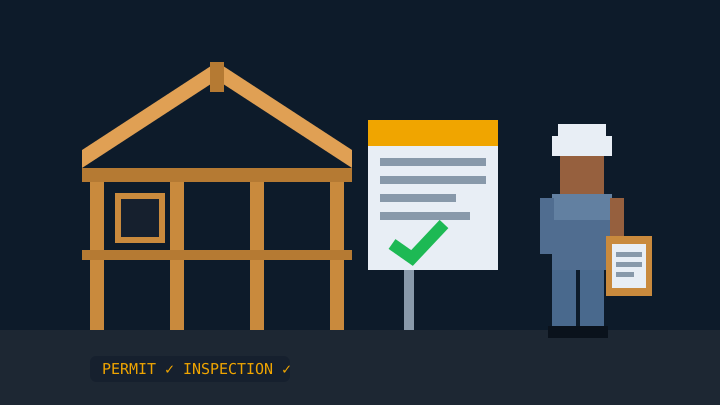
Licensed work must meet the Virginia Uniform Statewide Building Code. The USBC is exactly what its name says — uniform: localities generally may not adopt technical requirements more or less stringent than the statewide code, so the code book does not change when you cross a county line. What DOES change is administration — permit offices, submission requirements, inspection scheduling, and the building officials themselves — so the working rule is: one code, many counters; know your local building department. The standards expect you to obtain required permits, call for required inspections, and correct work that fails them. Dwell on why building without a permit is one of the most commonly charged violations in the disciplinary record. It is not because contractors don't know permits exist. It is because the permit conversation happens at the worst psychological moment — the customer wants to save the fee, the schedule is tight, the job 'probably' doesn't need one — and skipping it feels like a shortcut everyone agreed to. Then the deck sags, the buyer's home inspector finds the unpermitted addition, or the neighbor calls the county, and the same customer who asked you to skip the permit is now the complainant. The violation is entirely self-inflicted, and so is the defense: price the permit into every bid as a line item, pull it as a matter of policy, and tell hesitant customers the truth — the permit and inspection are how they know the work is right, and a contractor willing to skip them is showing you how they treat rules generally. Inspections are the same discipline: call them when required, show up, and treat a failed inspection as a punch list, not an insult — corrected and re-inspected work with a paper trail is exactly what the standards want to see.
Authority: USBC · 18 VAC 50-22-260
Customers' money
No part of the standards is enforced with less humor than the handling of customer funds. Money taken for work — deposits and draws — must be applied to that customer's project, and taking payment while failing to perform is where a conduct problem becomes a fraud problem. Learn the failure pattern by heart, because it is the most repeated story in the disciplinary docket: a contractor takes Customer A's deposit, hits an overrun on Customer B's job, and 'borrows' A's money to finish B — planning, sincerely, to catch up. Then C's deposit finishes A's job, D's finishes C's, and the contractor is running a private float that works right up until one customer pauses, one deposit is late, and the music stops. What began as cash-flow mismanagement ends as discipline, civil judgments, and Recovery Fund claims paid out in the contractor's name — and Module 6 will show you what a paid Recovery Fund claim means for a license. The defense is bookkeeping, not virtue: give every job its own ledger line the day the deposit clears, draw against milestones actually reached so money arrives as it is earned, and make sure the question 'whose money paid for this?' always has an answer you would be comfortable reading aloud at a hearing. When a job goes genuinely upside down — a busted estimate, a price spike — the honest move is the written change order and a hard conversation, not a quiet loan from the next customer. Run project money like it belongs to the project, because in every way that matters, it does.
Supervision and the scope of your license
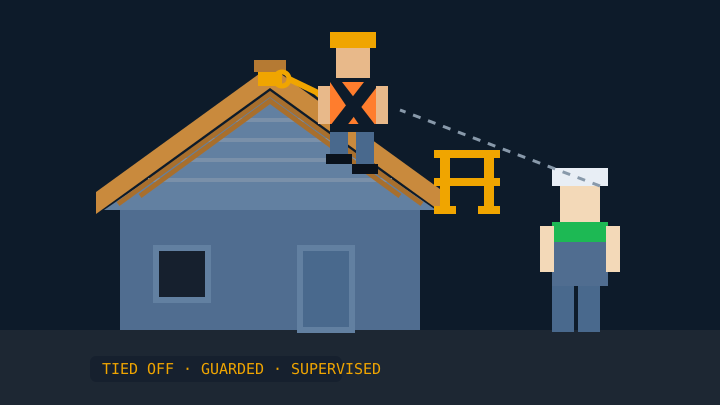
The standards hold the licensed firm responsible for the work performed under its license — all of it. That single sentence carries three duties. First, supervise: your crews and your subcontractors are doing YOUR licensed work; 'the sub did it' has never once persuaded a licensing board, because supervising the sub was precisely your job. Build supervision you can prove — site visits at the stages that matter, photos, a record of what was checked — both because it produces better work and because documented supervision is a defense while assumed supervision is a liability. Second, stay inside your license: keep work within your class ceiling and classification scope from Module 2 — the standards make operating outside them a conduct violation, not just a paperwork problem. Third, and read this one twice: never let your license be the front for someone else's unlicensed operation. 'Lending' a license — signing permits for work you don't control, putting your number on someone else's contract, taking a fee to be the license-holder-of-record for a crew you've never met — is a violation for the LENDER, not just the borrower. However it is dressed up, you are selling the Commonwealth's endorsement of you to someone the Commonwealth has not endorsed, and when their work fails, the complaint, the discipline, and the judgment land on your license. Finally, remember the firm's qualifications are people, not paper: if your qualified individual departs, the 60-day reporting duty from Module 3 starts running — a firm whose qualifications have silently walked out the door is operating on borrowed time.
When something goes wrong anyway
Standards violations rarely start as villainy; they start as an overrun, a dispute, a subcontractor who vanished mid-frame, a customer relationship that curdled. Every contractor with enough years has met the job that goes sideways despite honest effort — the standards do not demand perfection. What the Board weighs heavily is what you do next, and the fork in that road is worth studying. The contractor who communicates in writing, documents the site conditions, proposes remedies, and finishes or responsibly concludes the work has a project problem. The contractor who goes silent — stops answering, stops showing up, waits for it to blow over — is converting that same project problem into a conduct problem, because walk-offs harden into abandonment, which Module 5 addresses as a prohibited act with a specific 30-day definition. So build the going-wrong playbook before you need it: the moment a job wobbles, deliver the bad news early and in writing (the email you dread sending is the exhibit that saves you later); photograph and date the conditions; put every proposed fix, credit, or schedule change in a signed writing; and if the relationship is truly dead, conclude it responsibly — document where the work stands, return what is owed, and put the ending in writing too. None of that guarantees you'll be paid in full or thanked. It guarantees something more durable: that if the dispute reaches DPOR, a court, or the Recovery Fund process, the file tells the story of a professional handling a hard job — which is both the ethical answer and, not coincidentally, the best legal position you can occupy.
Optional deep dive — the deposit ledger, run honestly OPTIONAL
The customers'-money standard turns into bookkeeping in one move: give every project its own ledger line the day the deposit clears. Say Customer A pays a $5,000 deposit on a $16,000 bath remodel. The honest ledger shows $5,000 in, and every draw against it names A's job: A's demolition labor, A's tile order, A's plumber. The moment that ledger would show A's money buying Customer B's lumber, you have left cash-flow management and entered the pattern the Board sees over and over — robbing the next job to finish the last one. The discipline scales down as well as up: a one-truck operation can run it in a notebook or a spreadsheet; the point is that the question 'whose money paid for this?' always has an answer you would be comfortable reading aloud at a hearing. Two supporting habits make it nearly automatic. Invoice draws against milestones actually reached, so money arrives as work is earned rather than as a float you must not touch. And when a job goes upside down — an overrun, a busted estimate — say so early and paper the fix, because the written change order from Module 6 is also the honest way to re-price a job you got wrong, and it beats quietly borrowing from the next customer every time.

Authority: 18 VAC 50-22-260
Traducción de cortesía — la versión en inglés es la oficial del curso.
La conducta es una condición de la licencia
Pasar la puerta de entrada le otorga una licencia; las Normas de Práctica son lo que le permite conservarla. Codificadas en los reglamentos de la Junta en 18 VAC 50-22-260, las normas son la declaración del Estado sobre cómo se comporta un contratista licenciado — en los contratos, en la obra, con el dinero de los clientes y con la verdad. Note qué tipo de reglas son estas. Los requisitos de entrada del Módulo 2 trataban de la cualificación: ¿podía usted hacer el trabajo? Las normas tratan de la conducta: ¿cómo opera una vez que Virginia ha respondido por usted? Esa distinción importa porque una licencia es, en el fondo, el Estado diciéndole a los propietarios de viviendas que se puede confiar en un desconocido con su mayor bien — y las normas son los términos de ese respaldo. Léalas una vez como una lista de reglas y se sienten burocráticas; léalas como la descripción del contratista que usted querría contratar para la casa de su propia madre y se vuelven obvias: contratos reales, manejo honesto del dinero, trabajo con permiso e inspección, cuadrillas supervisadas, respuestas directas. También hay una verdad comercial escondida aquí que los nuevos licenciatarios descubren despacio: las normas son un arma competitiva. Cada competidor sin licencia o descuidado en su mercado las está incumpliendo a diario, y cada práctica que este módulo enseña — el contrato escrito, el manejo limpio del depósito, el permiso tramitado sin que se lo pidan — es visible para el cliente que decide entre usted y otro. Las juntas disciplinan según estas normas cada mes, y el expediente es público; este módulo trata de nunca estar en él, lo cual es más barato, y de ser la opción obvia cuando su cliente lo verifica, lo cual es rentable.
El contrato es la primera norma
Virginia espera que el trabajo residencial licenciado se rija por contratos reales y escritos — y las normas tratan el contrato como un documento de protección al consumidor, no como una formalidad. Antes de que comience el trabajo, su cliente debe tener en mano un acuerdo escrito que identifique a las partes y su licencia, describa el trabajo y el precio, e incluya las divulgaciones que Virginia exige — incluyendo, como detalla el Módulo 6, el aviso legalmente requerido sobre el Fondo de Recuperación de Transacciones de Contratistas (Contractor Transaction Recovery Fund) en los contratos residenciales. Recorra lo que hace cada elemento. La identificación de las partes y la licencia le dicen al cliente exactamente quién es responsable y le permiten verificarlo antes de que se libere el depósito. La descripción del alcance es donde la mayoría de las disputas se ganan o se pierden en realidad, meses antes de que empiecen: 'remodelar el baño' invita a la discusión; 'retirar y reemplazar la bañera, el revestimiento, el mueble de lavabo y el piso según el plano adjunto; pintura no incluida' lo resuelve mientras todos siguen siendo amigos. El precio y las condiciones de pago fijan cuándo se mueve el dinero y contra qué hitos. Y las divulgaciones requeridas existen porque la Asamblea General decidió que los propietarios las merecen — lo que significa que su ausencia es una falta de cumplimiento, no una cuestión de estilo. Un trato de palabra por encima del umbral de licenciamiento no es solo un mal negocio arriesgado; operar fuera de las normas del contrato es una infracción en sí misma, independientemente de cómo resulte el trabajo. La instrucción práctica es simple: cree una plantilla de contrato conforme, hágala revisar una vez y úsela en cada trabajo sin excepción — la disciplina de no-trabajo-antes-de-la-firma lo protege a usted al menos tanto como protege al cliente.
Normas de la obra — código, permisos, inspecciones
El trabajo licenciado debe cumplir el Código de Construcción Uniforme de todo el Estado de Virginia (Virginia Uniform Statewide Building Code, USBC). El USBC es exactamente lo que dice su nombre — uniforme: por lo general las localidades no pueden adoptar requisitos técnicos más o menos estrictos que el código estatal, así que el libro del código no cambia cuando usted cruza la línea de un condado. Lo que SÍ cambia es la administración — las oficinas de permisos, los requisitos de presentación, la programación de inspecciones y los propios funcionarios de construcción — así que la regla de trabajo es: un código, muchas ventanillas; conozca su departamento de construcción local. Las normas esperan que usted obtenga los permisos requeridos, solicite las inspecciones requeridas y corrija el trabajo que las reprueba. Deténgase en por qué construir sin permiso es una de las infracciones que más se imputan en el historial disciplinario. No es porque los contratistas no sepan que los permisos existen. Es porque la conversación sobre el permiso ocurre en el peor momento psicológico — el cliente quiere ahorrarse la tarifa, el calendario está ajustado, el trabajo 'probablemente' no lo necesita — y saltárselo se siente como un atajo con el que todos estuvieron de acuerdo. Luego la terraza se hunde, el inspector de vivienda del comprador descubre la ampliación sin permiso, o el vecino llama al condado, y el mismo cliente que le pidió saltarse el permiso ahora es el denunciante. La infracción es enteramente autoinfligida, y también lo es la defensa: incluya el permiso en cada presupuesto como una partida, tramítelo por norma y dígales la verdad a los clientes indecisos — el permiso y la inspección son cómo ellos saben que el trabajo está bien hecho, y un contratista dispuesto a saltárselos les está mostrando cómo trata las reglas en general. Las inspecciones son la misma disciplina: solicítelas cuando se requieran, preséntese y trate una inspección reprobada como una lista de pendientes, no como un insulto — el trabajo corregido y reinspeccionado con un rastro documental es exactamente lo que las normas quieren ver.
El dinero de los clientes
Ninguna parte de las normas se hace cumplir con menos humor que el manejo de los fondos del cliente. El dinero recibido por el trabajo — depósitos y avances — debe aplicarse al proyecto de ese cliente, y cobrar un pago sin ejecutar el trabajo es donde un problema de conducta se convierte en un problema de fraude. Aprenda de memoria el patrón de fallo, porque es la historia más repetida en el expediente disciplinario: un contratista toma el depósito del Cliente A, tiene un sobrecosto en el trabajo del Cliente B, y 'toma prestado' el dinero de A para terminar el de B — con la intención sincera de ponerse al día. Luego el depósito de C termina el trabajo de A, el de D termina el de C, y el contratista está operando un financiamiento privado que funciona justo hasta que un cliente hace una pausa, un depósito se retrasa, y la música se detiene. Lo que empezó como una mala gestión del flujo de caja termina en disciplina, sentencias civiles y reclamaciones al Fondo de Recuperación pagadas a nombre del contratista — y el Módulo 6 le mostrará lo que significa para una licencia una reclamación pagada del Fondo de Recuperación. La defensa es contabilidad, no virtud: dele a cada trabajo su propia línea contable el día que se libera el depósito, cobre los avances contra hitos realmente alcanzados para que el dinero llegue a medida que se gana, y asegúrese de que la pregunta '¿de quién era el dinero que pagó esto?' siempre tenga una respuesta que usted estaría cómodo leyendo en voz alta en una audiencia. Cuando un trabajo se descompone de verdad — un estimado fallido, un alza de precios — la jugada honesta es la orden de cambio escrita y una conversación difícil, no un préstamo silencioso del próximo cliente. Maneje el dinero del proyecto como si perteneciera al proyecto, porque en todo lo que importa, así es.
Supervisión y el alcance de su licencia
Las normas hacen responsable a la empresa licenciada del trabajo realizado bajo su licencia — todo él. Esa sola frase carga con tres deberes. Primero, supervisar: sus cuadrillas y sus subcontratistas están haciendo SU trabajo licenciado; 'el subcontratista lo hizo' nunca ha convencido a una junta de licencias, porque supervisar al subcontratista era precisamente su trabajo. Construya una supervisión que pueda demostrar — visitas al sitio en las etapas que importan, fotos, un registro de lo que se revisó — tanto porque produce mejor trabajo como porque la supervisión documentada es una defensa mientras que la supervisión supuesta es una responsabilidad. Segundo, manténgase dentro de su licencia: mantenga el trabajo dentro del techo de su clase y del alcance de la clasificación del Módulo 2 — las normas hacen de operar fuera de ellos una infracción de conducta, no solo un problema de papeleo. Tercero, y lea esto dos veces: nunca deje que su licencia sea la fachada de la operación sin licencia de otra persona. 'Prestar' una licencia — firmar permisos para trabajo que usted no controla, poner su número en el contrato de otro, cobrar una tarifa por ser el titular-de-licencia-de-registro de una cuadrilla que nunca ha conocido — es una infracción para el PRESTAMISTA, no solo para quien la toma prestada. Como sea que se disfrace, usted está vendiendo el respaldo que el Estado le dio a alguien a quien el Estado no ha respaldado, y cuando el trabajo de esa persona falle, la denuncia, la disciplina y la sentencia recaen sobre su licencia. Finalmente, recuerde que las cualificaciones de la empresa son personas, no papeles: si su individuo cualificado se marcha, empieza a correr el deber de reportar en 60 días del Módulo 3 — una empresa cuyas cualificaciones han salido silenciosamente por la puerta está operando con el tiempo prestado.
Cuando algo sale mal de todos modos
Las infracciones de las normas rara vez empiezan como villanía; empiezan como un sobrecosto, una disputa, un subcontratista que desapareció a mitad de la estructura, una relación con el cliente que se agrió. Todo contratista con suficientes años ha conocido el trabajo que se tuerce a pesar del esfuerzo honesto — las normas no exigen perfección. Lo que la Junta pondera con fuerza es lo que usted hace después, y esa bifurcación del camino vale la pena estudiarla. El contratista que se comunica por escrito, documenta las condiciones del sitio, propone soluciones, y termina o concluye responsablemente el trabajo tiene un problema de proyecto. El contratista que se queda callado — deja de responder, deja de presentarse, espera a que pase — está convirtiendo ese mismo problema de proyecto en un problema de conducta, porque las salidas se endurecen hasta convertirse en abandono, que el Módulo 5 aborda como un acto prohibido con una definición específica de 30 días. Así que arme el plan de acción para cuando-algo-sale-mal antes de necesitarlo: en el momento en que un trabajo se tambalee, dé la mala noticia pronto y por escrito (el correo que teme enviar es la prueba que lo salva después); fotografíe y feche las condiciones; ponga cada solución, crédito o cambio de calendario propuesto en un escrito firmado; y si la relación está verdaderamente muerta, conclúyala responsablemente — documente en qué punto está el trabajo, devuelva lo que se debe, y ponga también el final por escrito. Nada de eso le garantiza que le paguen en su totalidad ni que le den las gracias. Le garantiza algo más duradero: que si la disputa llega a DPOR, a un tribunal o al proceso del Fondo de Recuperación, el expediente cuenta la historia de un profesional manejando un trabajo difícil — que es a la vez la respuesta ética y, no por casualidad, la mejor posición legal que puede ocupar.
Profundización opcional — el libro de depósitos, llevado con honestidad
La norma del dinero de los clientes se convierte en contabilidad con un solo movimiento: dele a cada proyecto su propia línea contable el día que se libera el depósito. Digamos que el Cliente A paga un depósito de $5,000 en una remodelación de baño de $16,000. El libro honesto muestra $5,000 de entrada, y cada avance contra él nombra el trabajo de A: la mano de obra de demolición de A, el pedido de azulejos de A, el plomero de A. En el momento en que ese libro mostraría el dinero de A comprando la madera del Cliente B, usted ha dejado la gestión del flujo de caja y ha entrado en el patrón que la Junta ve una y otra vez — robarle al próximo trabajo para terminar el último. La disciplina escala tanto hacia abajo como hacia arriba: una operación de un solo camión puede llevarla en un cuaderno o en una hoja de cálculo; el punto es que la pregunta '¿de quién era el dinero que pagó esto?' siempre tenga una respuesta que usted estaría cómodo leyendo en voz alta en una audiencia. Dos hábitos de apoyo la hacen casi automática. Facture los avances contra hitos realmente alcanzados, para que el dinero llegue a medida que se gana el trabajo en lugar de como un financiamiento que no debe tocar. Y cuando un trabajo se descomponga — un sobrecosto, un estimado fallido — dígalo pronto y documente la solución, porque la orden de cambio escrita del Módulo 6 es también la manera honesta de reajustar el precio de un trabajo que calculó mal, y le gana cada vez a tomar prestado en silencio del próximo cliente.
Authority & state references
- 18 VAC 50-22-260 — Filing of charges; prohibited acts
Official text opens on the Virginia Law Portal (law.lis.virginia.gov).
REINFORCE IT — COUNTS TOWARD YOUR 6 HOURS
Lock in this module with a quick round — fresh puzzles daily. Completing a game here credits 15 minutes toward your instructional time (once per game per day). Launch the games from this button so the credit counts.
Independent contractor-education provider. Not affiliated with, endorsed by, or acting for the Virginia Board for Contractors or DPOR. GC Prep does not issue or grant a contractor license. Verify all requirements with DPOR.